
Industry
Business Strategy
Roles
Product Strategist | UX Researcher
Timeline
5 weeks
Introduction
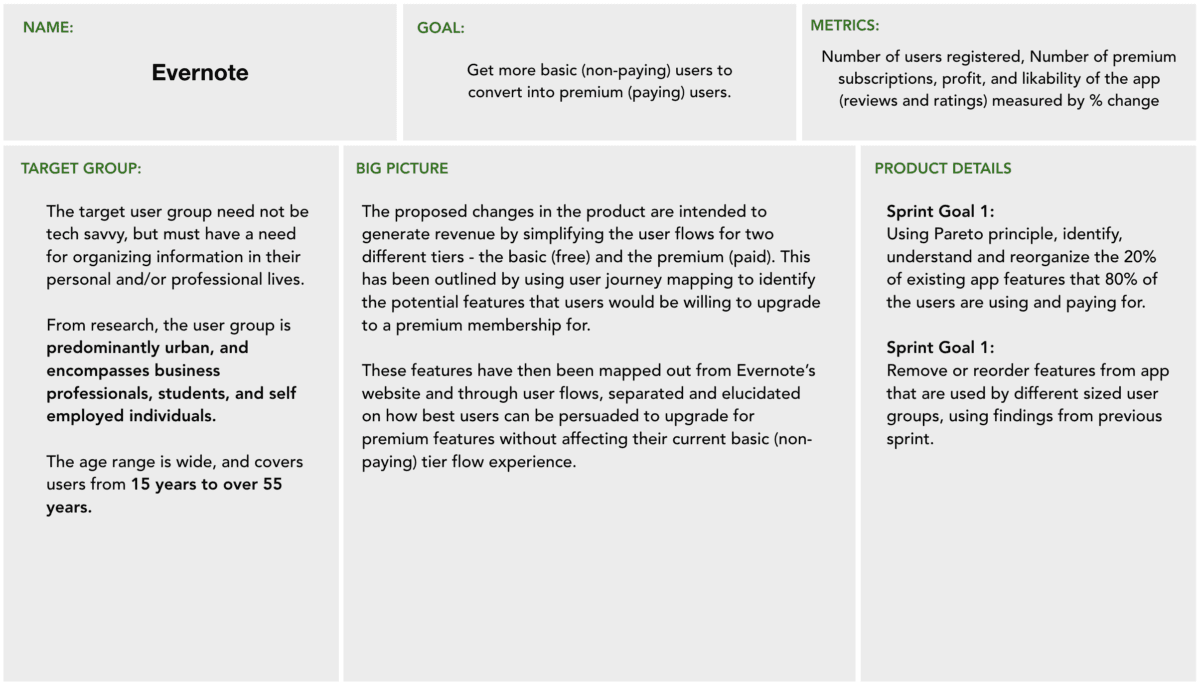
Evernote is a global leader in information organization, yet it faces a common "Freemium" challenge: while it boasts over 200 million users, only 3.75% contribute to revenue as premium subscribers. As part of this Product Canvas exercise, I explored how strategic UX interventions and feature re-prioritization could drive higher conversion rates from basic to premium tiers without alienating the core user base.
Challenge
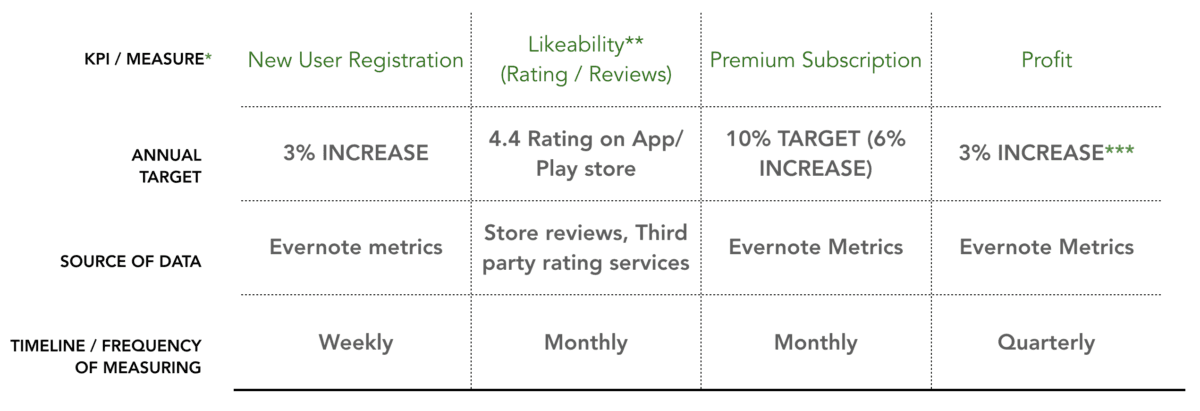
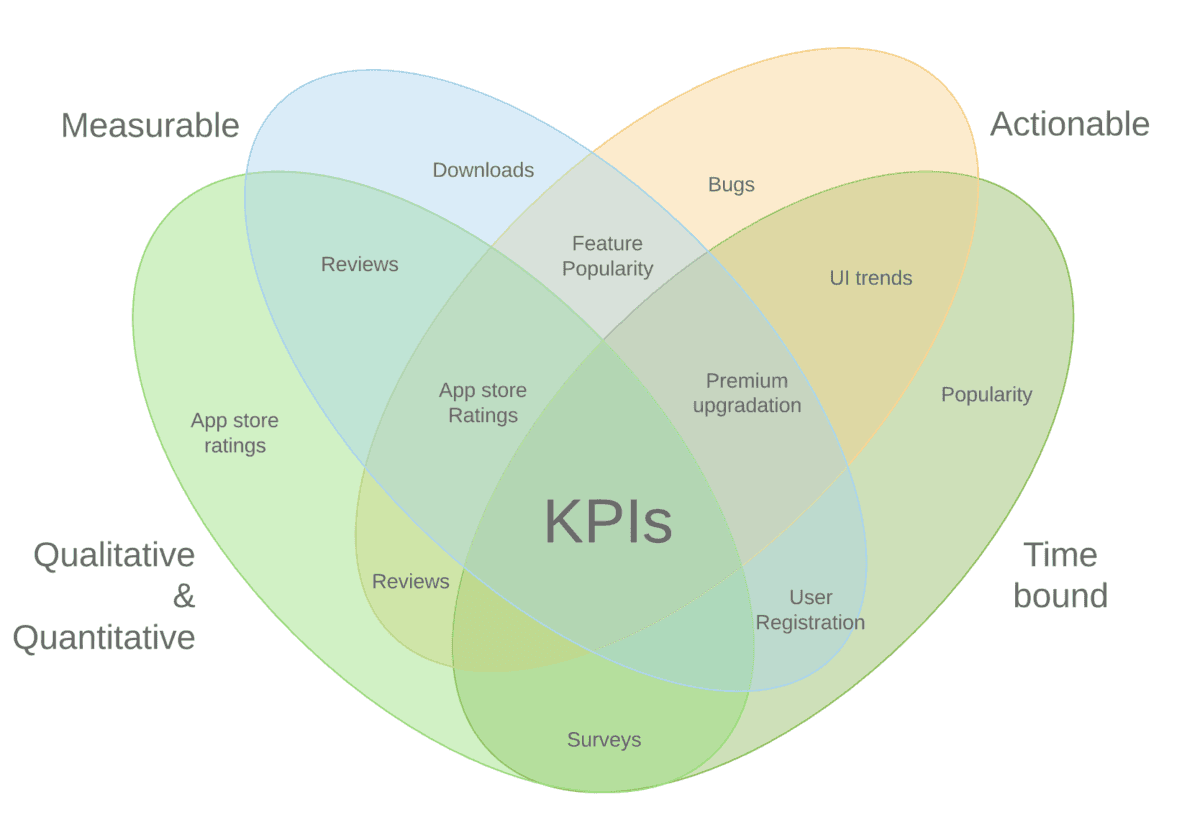
The project goal was to move beyond "Vanity Metrics" (like total sign-ups) and focus on Actionable Metrics that drive revenue.
The Problem: The current distinction between tiers (note size, device syncing) wasn't "pressing" enough to trigger an upgrade for the average student or professional.
The Objective: Identify high-value features that users are "willing to pay for" and integrate them into the premium funnel through behavioral triggers.
Research
Targeting a diverse demographic (ages 15–55), I conducted online surveys to identify "Power User" features that provide the most daily utility.
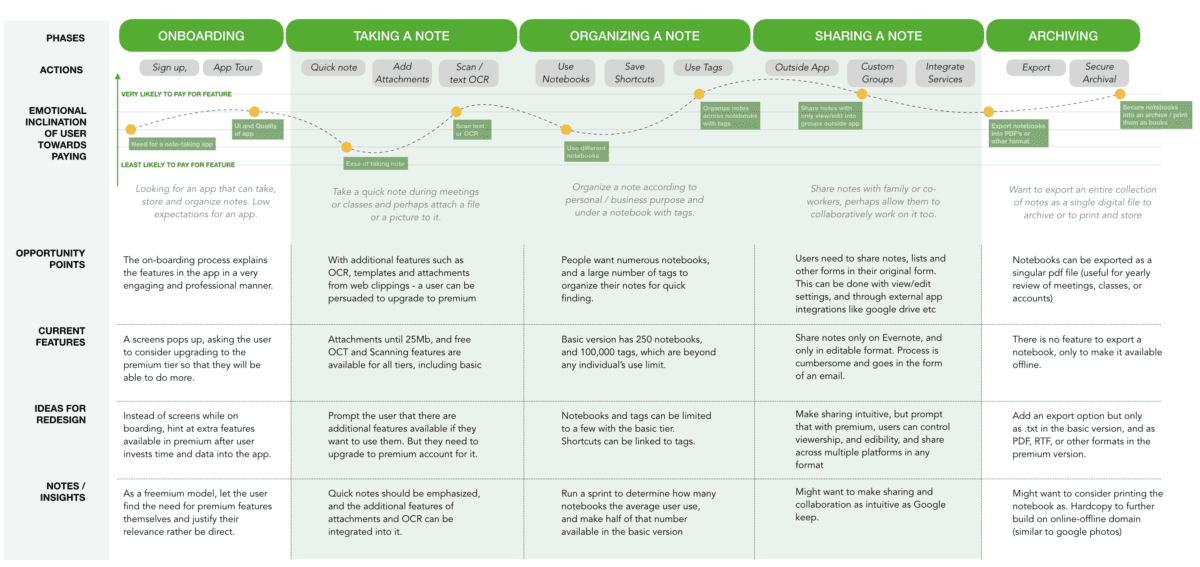
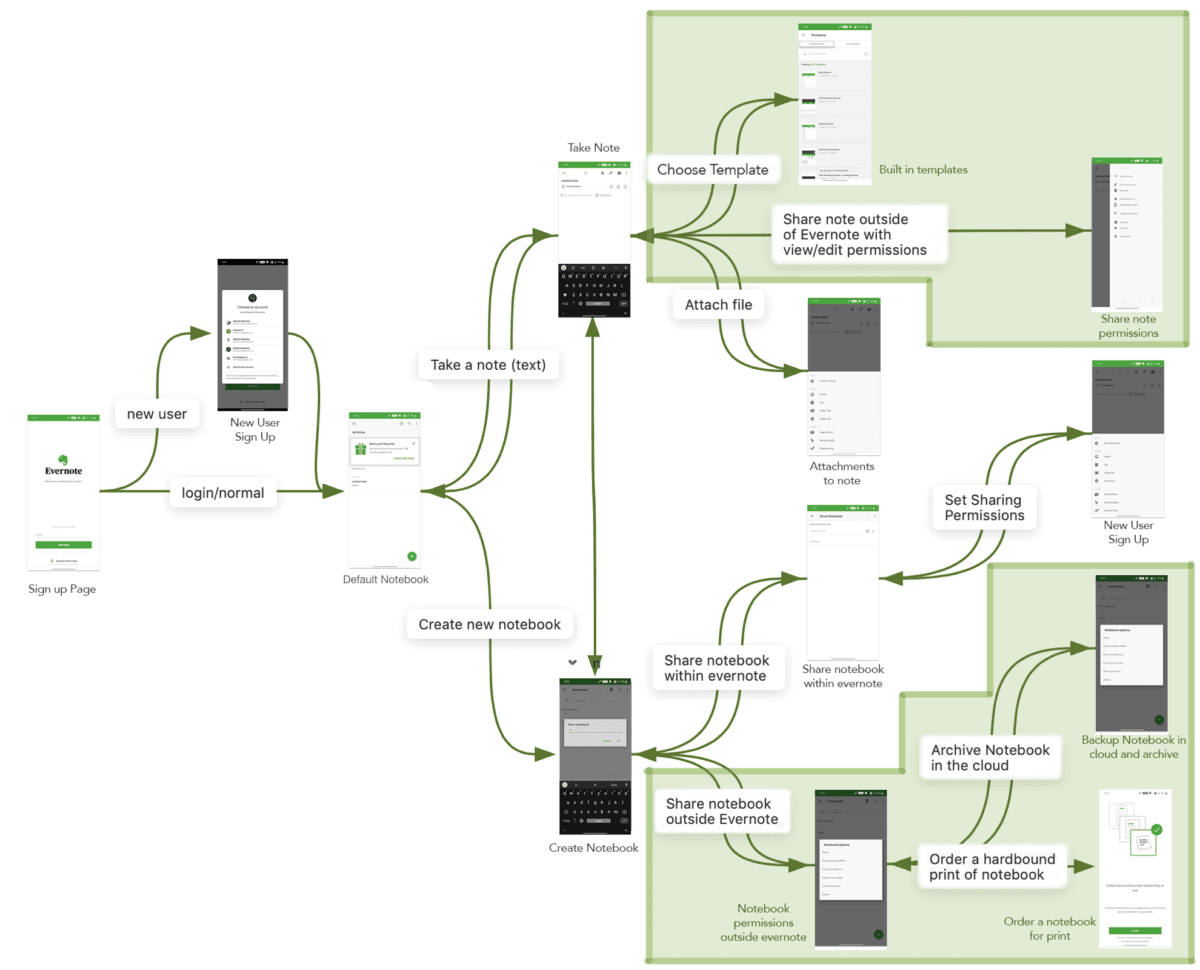
User Journey Mapping: I mapped the current user experience to identify "Points of Intervention"—specific moments where a user’s need for organization intersects with a premium-only feature.
Feature Segregation: By analyzing user flows, I discovered that the lack of hierarchy in features made the app feel "overwhelming" yet "too generous" in the free tier, leaving no incentive to upgrade.
Solution
My solution focused on refining the Product Canvas to create a clearer value proposition for the Premium tier:
Strategic Flow Segregation: I redesigned the flows for note-taking and sharing, moving specific high-utility features (like advanced templates and tag-based organization) into the premium tier while keeping the "core" experience simple and lucid.
Behavioral Persuasion: I integrated timed prompts within the free tier flow. These aren't just ads; they are contextual nudges that appear when a user is most likely to benefit from a premium feature, imparting a richer understanding of the app's full potential.
Conclusion
Trying to be "everything for everyone" in a free tier often confuses the user and hurts the bottom line. By using a Design Sprint approach to trim feature hierarchy and categorize them by frequency of use, Evernote can transform from a "daunting" tool into a streamlined, profitable ecosystem. The result is a measurable increase in revenue driven by a more intentional, high-value premium user base.
As a life-long student of design, I’m continuously improving my work. Please look forward to more updates.
Sashank Mullapudi's Portfolio © 2025. Designed by Sashank Mullapudi