Industry
Service Design
Team
3 members
Roles
Researcher | Designer (Lo-fi)
Timeline
4 weeks
Introduction
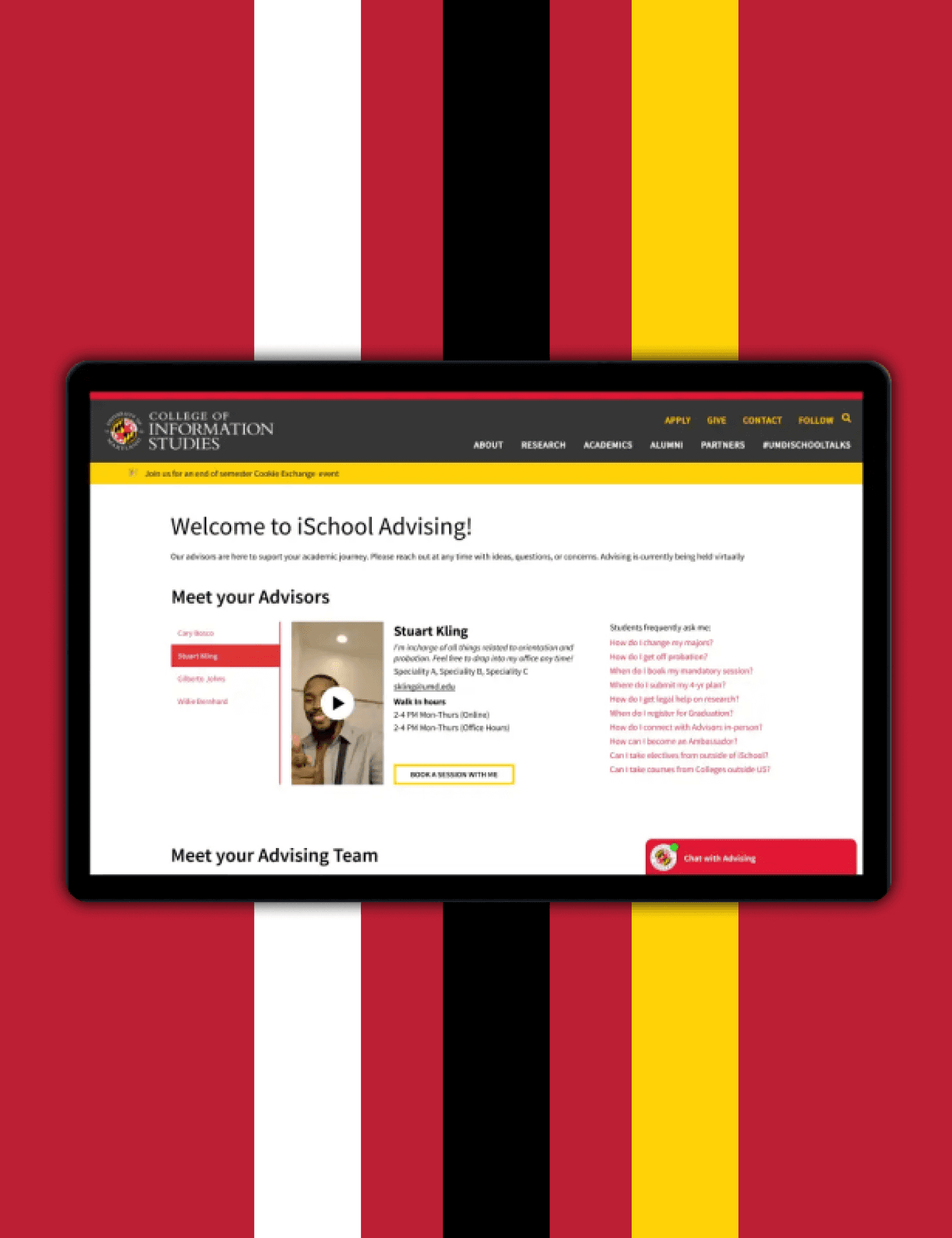
The University of Maryland’s School of Information Science (iSchool) experienced a surge in enrollment, leading to significant pressure on the undergraduate advising committee. As part of a 6-person research team, I spent two months analyzing the bottlenecks in the advising process. My role spanned UX Research, Modeling, Concept Design, and Research Operations.
Research
To understand the "Why" behind advisor burnout and student frustration, we employed a multi-methodological approach while respecting strict FERPA privacy regulations:
Diary Studies: We utilized advisors' self-reported logs to capture immediate pain points post-session, bypassing the need for direct observation of private student meetings.
Contextual Inquiry: We observed advisors and ambassadors "in the wild" to capture workflow friction, motives, and unspoken technical hurdles.
Interviews: We spoke with several advisees to capture raw, unbiased expectations of the system.
Modeling
We translated our data into three specialized models to visualize systemic failures:
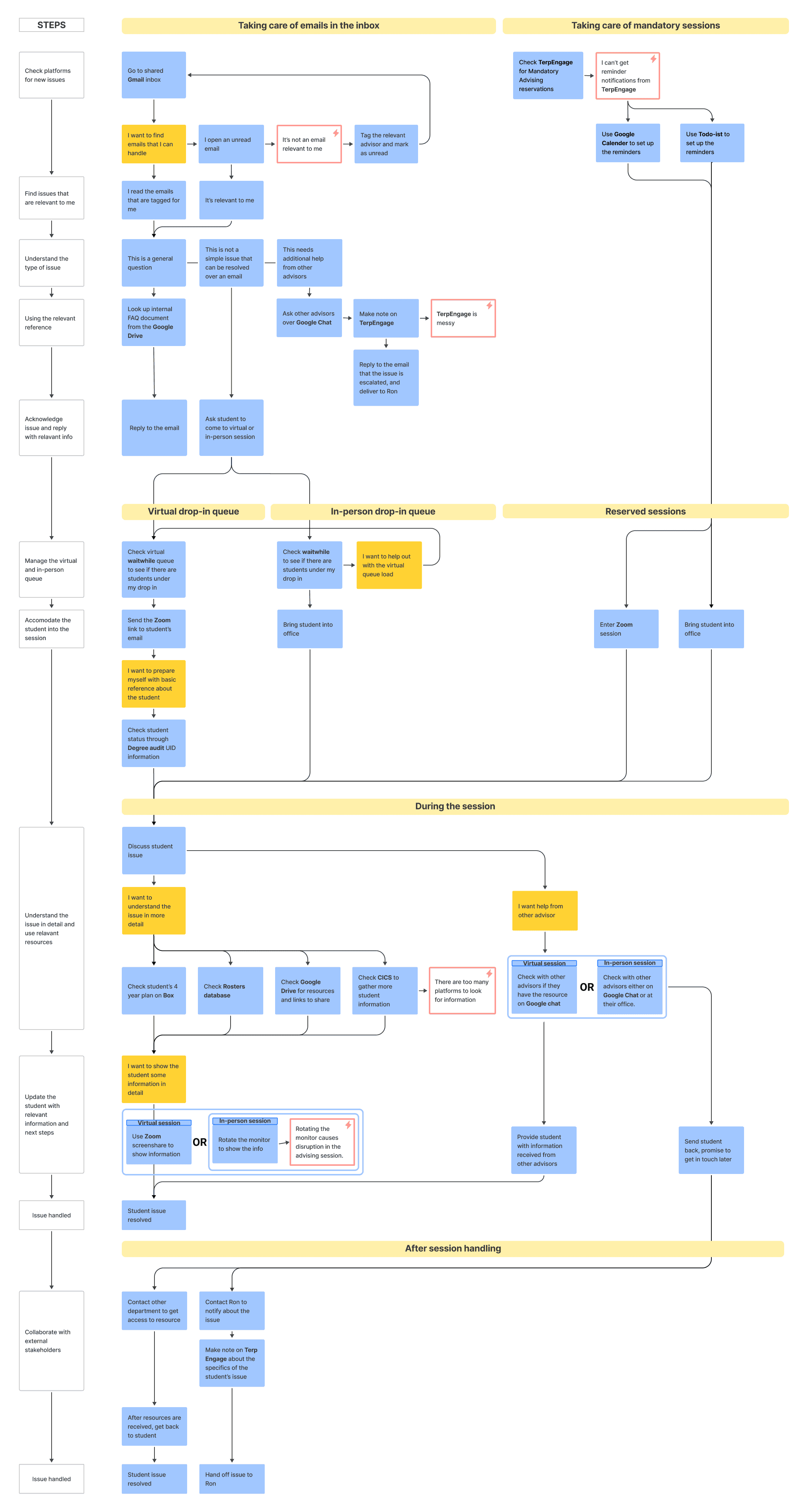
Sequence Model (The Workflow Loop): Mapped the journey from an initial student email to session resolution. We discovered a "Platform Paradox"—advisors were forced to toggle between 3+ fragmented platforms (TerpEngage, Box, CICS), leading to cognitive overload and data dispersion.
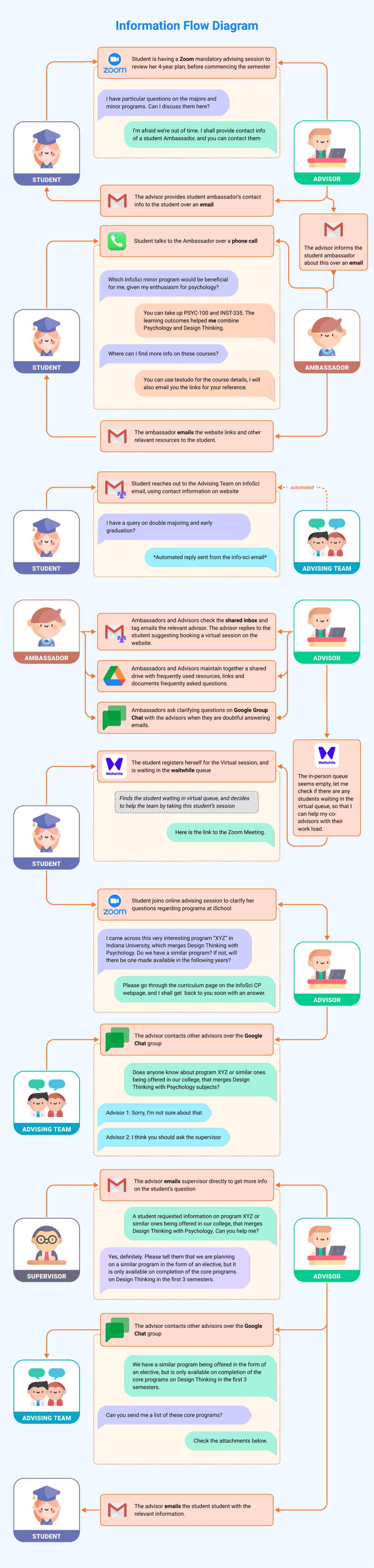
Information Flow Model (The Gatekeeper Role): Revealed that Student Ambassadors are the primary filters for the department. However, a communication disconnect occurred during escalations; students were forced to "restart" their stories because ambassadors couldn't directly transfer context to advisors.
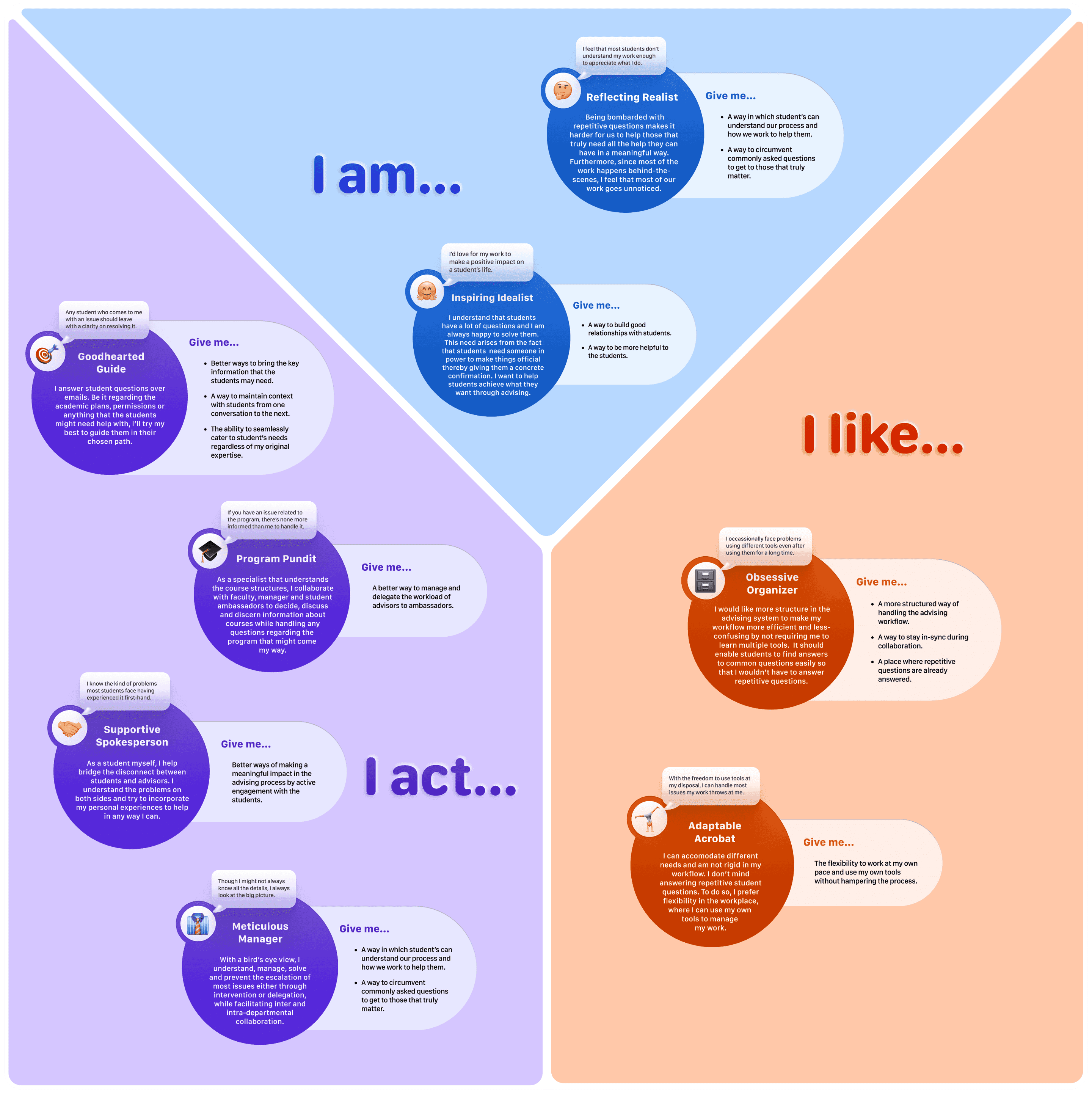
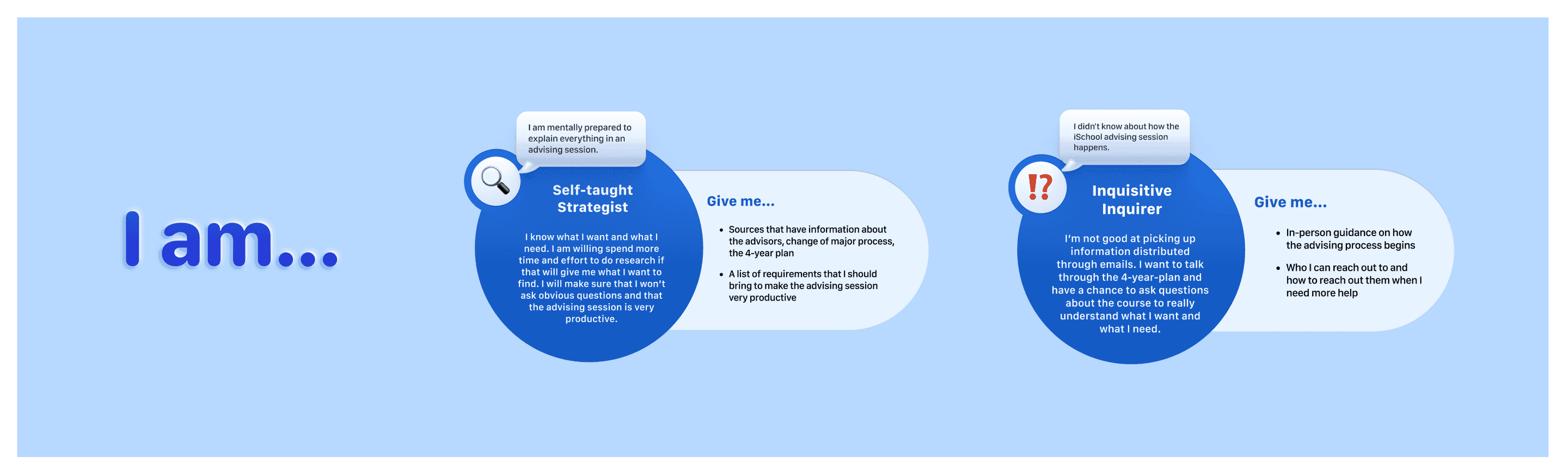
Identity Model (The Expectation Gap): Highlighted a fundamental mismatch. Students wanted "self-service" quick answers, while advisors were positioned for "deep-dive" academic planning.
Solutions
We categorized our findings into actionable design tracks based on student behavior:
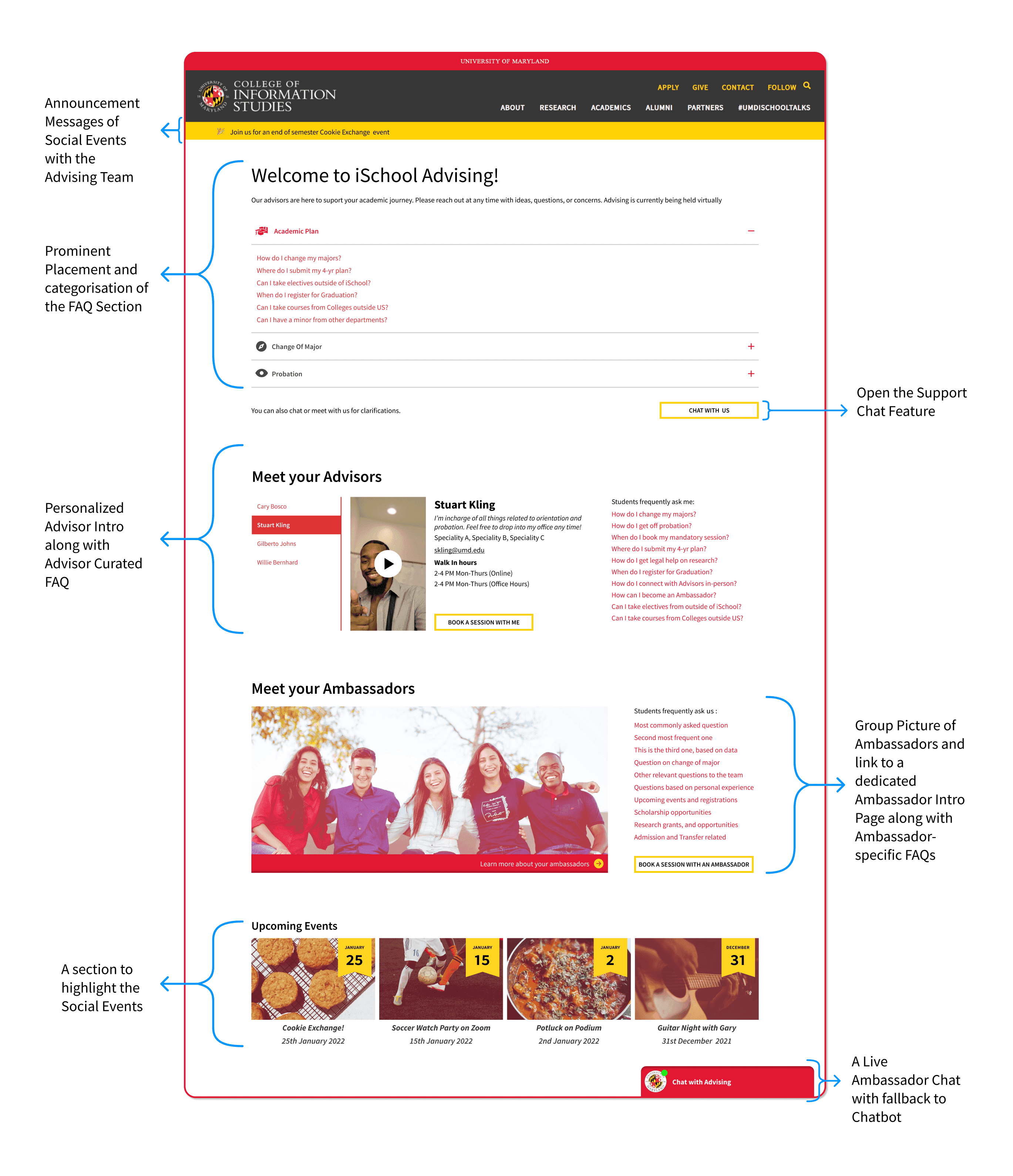
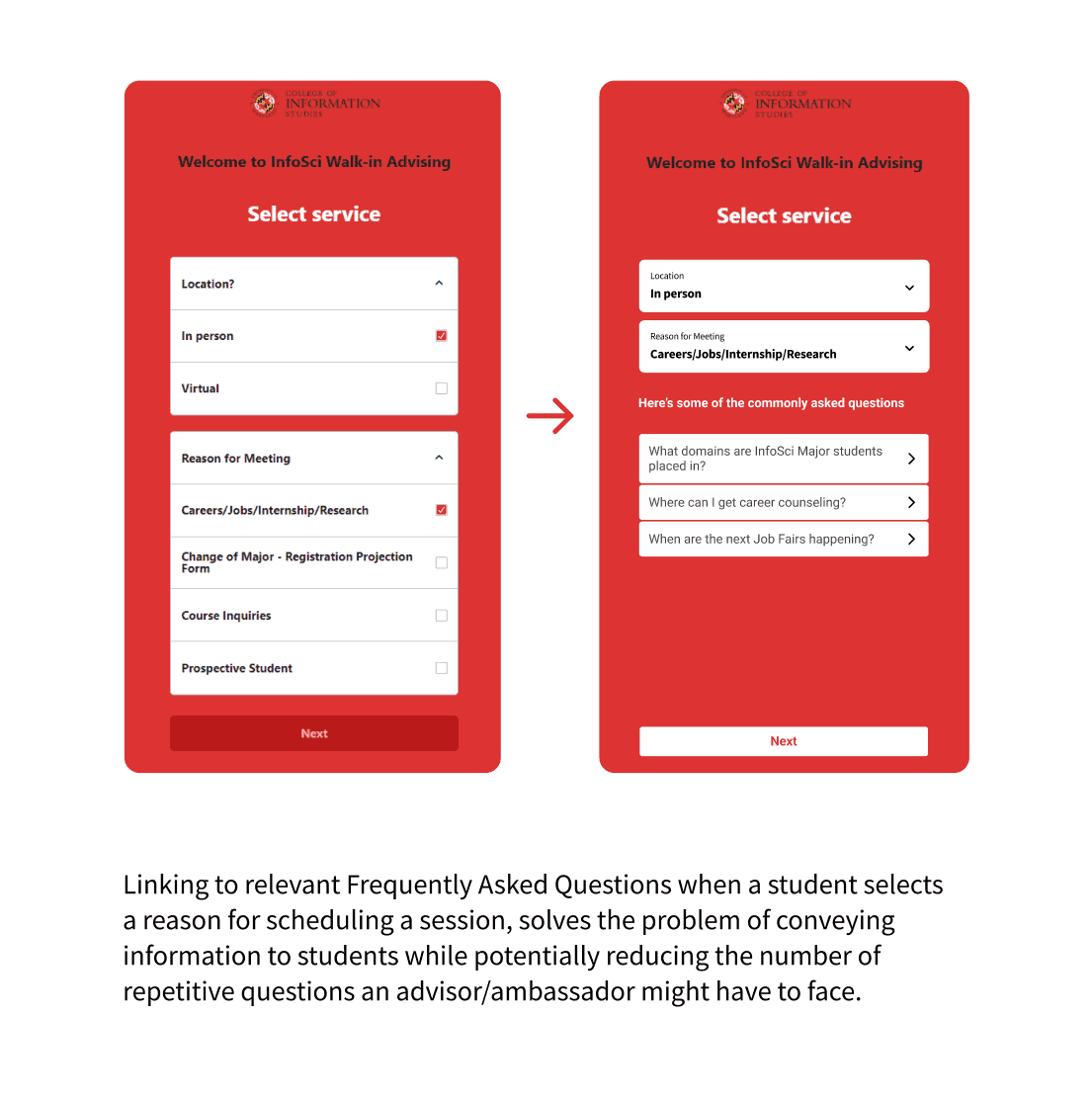
The "Active Seeker" Track (Self-Service): Improved website information architecture to allow students to find answers independently, reducing the volume of "common" emails in the advisor's inbox.
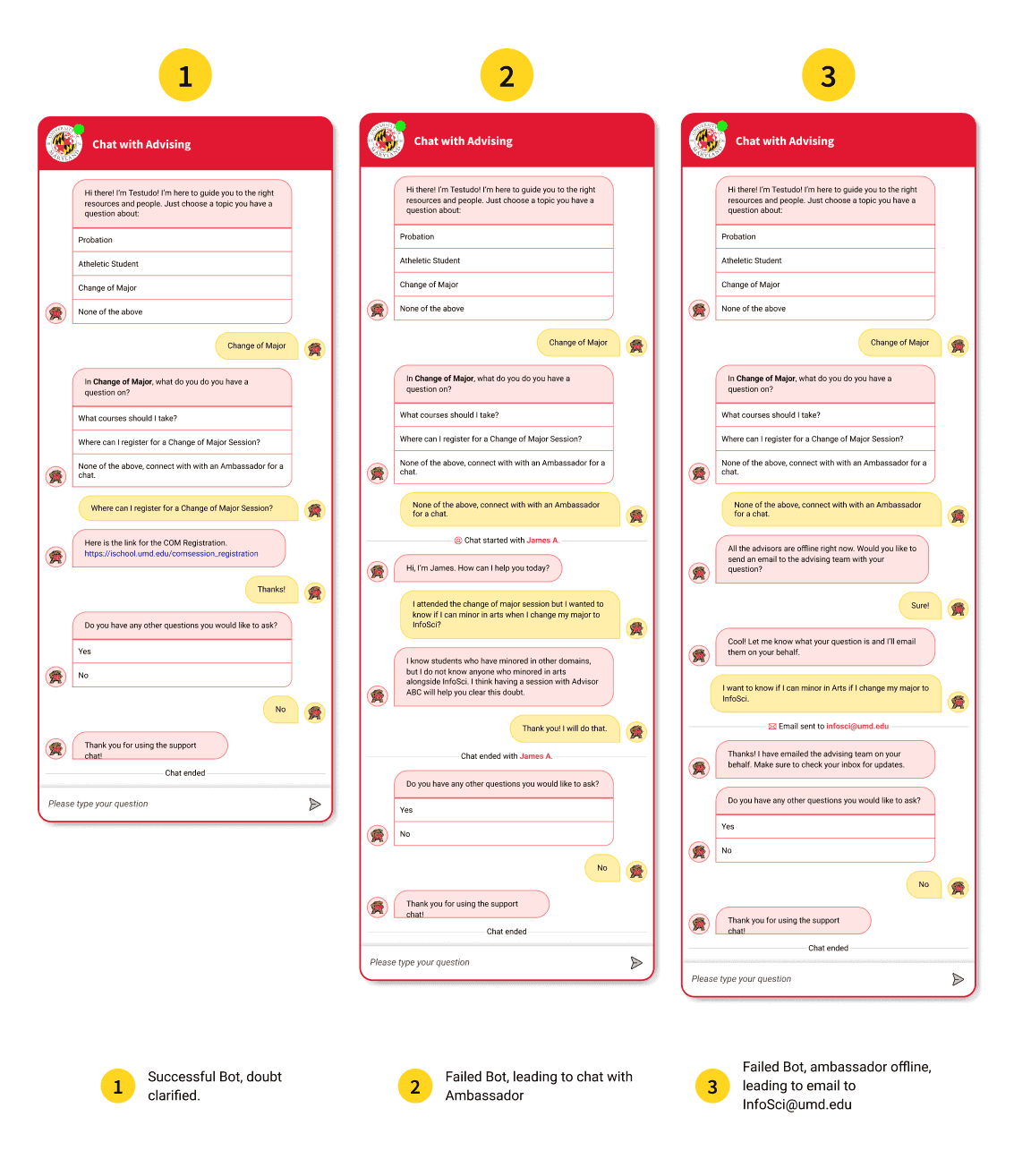
The "Guided" Track (High-Touch): Streamlined the handover process between ambassadors and advisors to eliminate repetitive student storytelling.
Reflections
This project was a masterclass in research agility. When our initial Diary Studies yielded low participation, we quickly pivoted to deeper Contextual Inquiries to ensure our findings remained robust. This experience taught me that in UX, the plan must be as flexible as the user needs it to be.
As a life-long student of design, I’m continuously improving my work. Please look forward to more updates.
Sashank Mullapudi's Portfolio © 2025. Designed by Sashank Mullapudi